

Dentures Boston
Seamlessly Fill Out Your Smile

Unfortunately, tooth loss is a problem that all kinds of people face. While it’s most common among seniors, we see patients of all stripes who are desperately in need of tooth replacement.
If you’re one of them, dentures are one of the fastest, easiest, and most cost-efficient methods of filling out your smile. A single prosthetic can replace all the teeth in a row, restoring you to a much greater state of oral health. The Boston team here at Kraft & Schrott Dental Associates has all the tools necessary to give you a beautiful new smile, so if you’re curious, call us for a consultation today.
Why Choose Kraft & Schrott Dental Associates for Dentures?
- Dental Team Consisting of Internationally Recognized Experts
- Comprehensive Care for Patients of All Ages
- Prosthetics Designed with Cutting Edge Technology
Who's a Good Candidate for Dentures?

Dentures remain a popular solution for rebuilding after tooth loss due to their versatility. Regardless of how many natural teeth you have remaining, our team in Boston can provide you with lifelike dentures to restore a beautiful, functional smile.
However, that doesn’t mean that this is the best solution to meet everyone’s unique needs. Before proceeding, you must consult one of our providers to ensure it’s the right treatment for you. Continue reading to learn more about who benefits from this service and who’s considered an ideal candidate!
Effects of Missing Teeth

Did you know that periodontitis, or advanced gum disease, is the number one leading cause of tooth loss in adults? But teeth can also go missing due to severe damage, decay, or physical trauma that destabilizes or dislodges them.
Whatever the reason, losing permanent adult teeth can potentially detract from your daily quality of life in several ways. For instance, you might struggle to eat or speak normally. Furthermore, your jawbone starts to thin after teeth fall out, which can result in sunken-looking cheeks and additional facial wrinkles, which can leave you feeling self-conscious about the way you look.
What Qualifies You for Dentures?

Before proceeding, you must meet with one of our providers so they can examine your condition to determine whether dentures are right for you. We’ll need to ensure no pre-existing problems, like gum disease, interfere with the results, and we will treat any areas of concern before proceeding.
Then, there are several types of dentures, and the recommended restoration depends significantly on your unique circumstances, like how many teeth you’ve lost. For example, if you’re missing a few teeth sporadically throughout your mouth, you might benefit from a partial set to close the gaps. Meanwhile, those who have lost most or all of their adult teeth will likely require complete arches. If you’re seeking a more permanent solution for tooth loss, our team might recommend implant dentures, which are known for their resilience and stability.
Alternative Tooth-Replacement Options
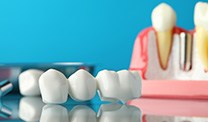
If our team finds that you’re not a good candidate for dentures, don’t lose hope! There are other treatment options for rebuilding smiles that you might still benefit from, such as:
- Dental bridges. These restorations are ideal for replacing one to three consecutively missing teeth in a row. They contain the required number of pontics (artificial teeth) between a dental crown that anchors to healthy teeth or implants on either side of the gap in your grin.
- Dental implants. These replacement teeth are the only ones embedded into your jaw to become more permanent part of your mouth. Anywhere from four to eight posts can be carefully positioned to anchor a full set of dentures.
Learn More About Dental Bridges
Learn More About Dental Implants
Types of Dentures

Depending on the unique nature of your situation, there are a variety of different dentures capable of helping you. We’ll be able to give you individualized advice regarding which will work best for you when we meet you in person, but here’s what you should know about the varieties available to you before that.
Partial Dentures
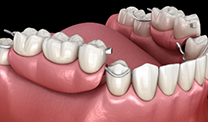
Having large gaps can make it incredibly difficult to smile with confidence, even if you aren’t actually missing all of your teeth. In this case, partial dentures may be perfect for you.
This prosthetic consists of artificial teeth on an acrylic base. This is connected to the existing ones via small metal hooks, allowing them to be clipped onto the existing teeth.
Full Dentures
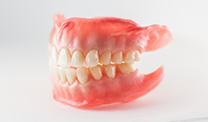
Full dentures, on the other hand, are designed to replace all of the teeth on the gum ridge. Instead of hooking onto teeth, they are designed to adhere directly to the gums entirely via suction. They are constructed from meticulously molded acrylic, making them both durable and well-fitting.
Implant Dentures
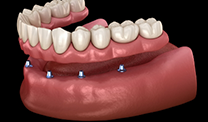
If you’re interested in greater stability, you may be interested in implant dentures. This involves adhering your prosthetic to thin metal rods implanted into the jaw, affording you much greater stability and bite strength as well as better durability in the long run.
Learn More About Implant Dentures
The Benefits of Dentures

Dentures are designed to perfectly fit your gums, enabling you to get a beautiful-looking smile that’s incredibly reliable. This allows you to enjoy greater confidence, eat a more nutritious diet, and speak much more easily than you can without teeth. Dentures also support the muscles in the face, giving you a healthier and more youthful appearance.
Understanding the Cost of Dentures

Dentures are durable, lifelike prosthetics that can replace an entire arch of teeth. They can be completely customized to your individual needs, right down to the shape, size, and shade of your new teeth. But because each pair is individual as your smile, there’s no way for us to charge a one-size-fits-all price for them. The best way to get an accurate price quote for the cost of dentures is to visit us for an in-person consultation. At this appointment, we’ll examine your smile and go over your options for customizing restorations that work for you. In the meantime, feel free to read more about how we’ll calculate your price once you do!
Factors that Affect the Cost of Dentures
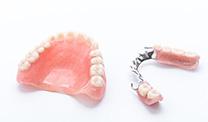
Because they are completely customized to your individual smile, there are many factors that can affect the cost of dentures, including:
- Preliminary procedures like tooth extractions or gum disease therapy to restore your oral health and prepare your mouth for your restorations.
- The specific type of acrylic used to create your denture base. This can be dyed to match your existing gum tissue to look more realistic in your smile. The more detailed, the higher the price.
- The material used for the teeth in your dentures, which can be made of acrylic or porcelain. While acrylic is more affordable, porcelain is more realistic looking and durable.
It is important to understand that while some materials may be less expensive, that isn’t always a good thing. When it comes to something that will reside in your mouth for years to come, it’s important to opt for the highest quality, not just for appearance’s sake, but for your own safety.
Are Implant Dentures More Expensive?
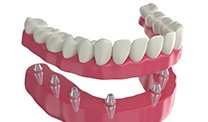
Many patients are curious about the difference in cost between traditional and implant dentures. While it is true that implant dentures are more expensive, this is due to a few important differences. First, implant dentures are considered permanent. They attach securely to the jawbone via a series of surgically inserted dental implant posts which cannot be removed. This means that not only do they look like your real teeth, but they provide an unprecedented secure hold that allows them to chew a full diet, won’t slip and slide, and unlike traditional dentures, won’t need to be removed for cleaning and soaking.
Furthermore, unlike traditional dentures which can be easily damaged and typically last about five to seven years, implant dentures can last much longer (even decades!) with proper care.
Does Dental Insurance Cover Dentures?

Because most dental insurance providers consider dentures to be a major procedure, they should offer some level of coverage for them. In most cases, this will be around 50 percent, but it depends on your individual plan. At Kraft & Schrott Dental, our dental insurance team will happily verify your coverage and file any paperwork on your behalf before your treatment begins.
Other Options for Making Dentures Affordable

In addition to being in-network with several popular dental insurance providers and welcoming out-of-network plans, Kraft & Schrott Dental is pleased to accept payment plans from our preferred third-party lender, CareCredit. With this program, you can split up the cost of your dentures into multiple, low or no interest monthly payments that may be more suitable for your budget. To learn more about CareCredit, visit our website or call us today for assistance.
If you’re ready to restore your healthy, beautiful smile with durable, lifelike dentures from Kraft & Schrott Dental, contact us today and schedule your consultation to begin!
I Need a Checkup & Cleaning I Am Looking for a Dentist for My Child I am Worried About Gum Disease I Have a Cavity or Broken Tooth I am Missing One or More Teeth I Want to Enhance My Smile I am Scared of the Dentist I Have Jaw Pain I am Worried About Sleep Apnea I Have a Dental Emergency View Our Services